






Working to make malaria control faster, cheaper, and safer to achieve national elimination-- in Uganda and beyond.
Learn MoreShining a spotlight on the communities most at risk for NTDs to improve delivery strategies.
Learn MoreBringing hands-on, project-based STEAM learning to the rural Ugandan classroom.
Learn More
On July 26th, we proudly joined government leaders, Members of Parliament, development partners, civil society, and fellow advocates for the Parliamentary Walk Against Malaria 2026—a powerful reminder that ending malaria requires all of us.
At Pilgrim Africa, we believe that every child deserves the opportunity to learn, grow, and thrive without the burden of malaria. That is why we continue to invest in evidence-based interventions that protect learners, strengthen communities, and support Uganda's journey towards malaria elimination.
The walk may last a few kilometres, but the commitment it represents reaches every school, every family, and every community affected by malaria.
Together, we can turn collective action into lasting impact.
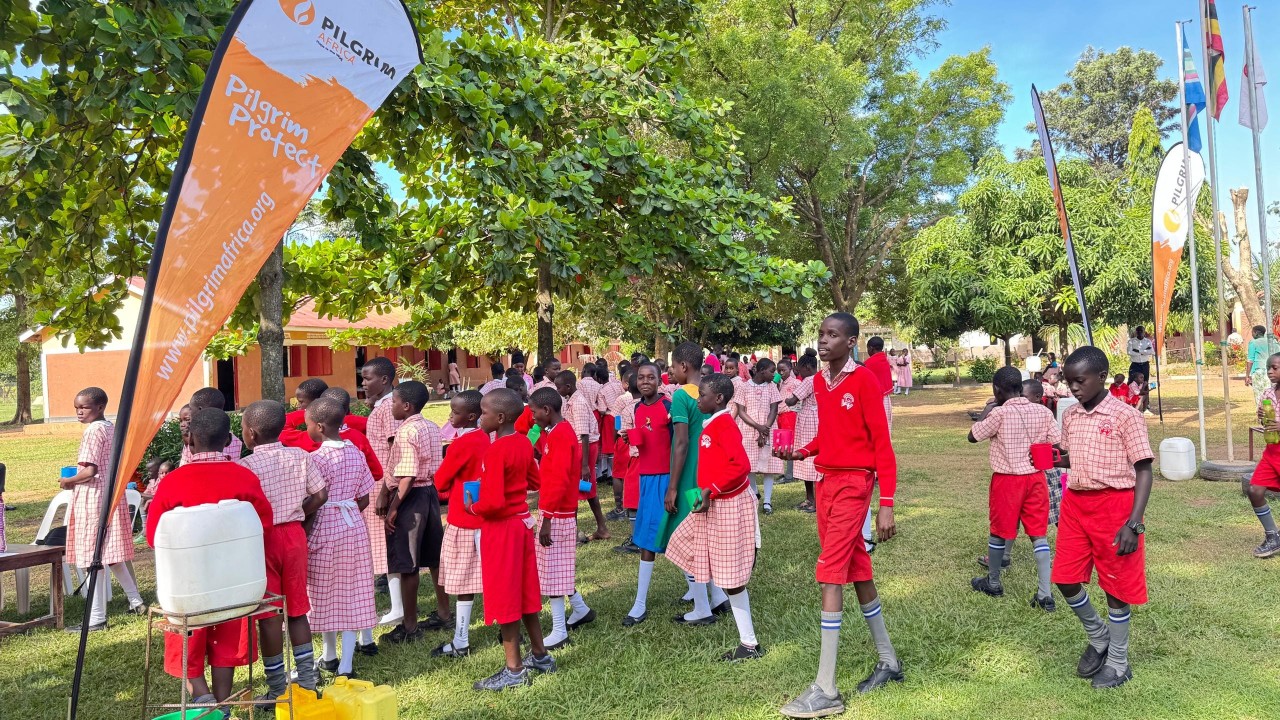
The loss of a teenage child from malaria is a pain no family should ever have to endure. This kind of pain is unfathomable! It shatters dreams, devastates parents, and leaves an empty desk in a classroom that will never again be filled. The recent death of a student at Gayaza High School is a heartbreaking reminder that malaria continues to steal the lives of Uganda's children, including those we often assume are safe because they are attending school. This tragedy should not be viewed as an isolated event. It should be a national wake-up call.
In epidemiological week 26, Uganda recorded 143,756 confirmed malaria cases and a 30.9% malaria test positivity rate. The ministry also reported 17 deaths during the same week, reminding us that despite remarkable progress, malaria continues to claim the lives of our children when it is a preventable disease. Yet behind every statistic is a child, a family, a teacher, and a community forever changed. Malaria in schools is more than just a health problem; it is an education crisis. Every malaria episode keeps a learner away from school, disrupts examinations, reduces concentration, and places huge emotional and financial strain on families. And yet, known malaria prevention in schools costs less than $1 per student. A child who survives severe malaria may experience long-term cognitive impairment, poorer educational attainment, and repeated absenteeism. Studies estimate that each malaria episode results in 2 to 6.5 days of missed schooling, with cumulative effects on academic performance and future productivity.
With more than 75% of Uganda's children spending much of their time in school, our classrooms have become one of the country's largest, and most overlooked, settings for malaria prevention. The encouraging news is that Uganda knows what works. The country does not need to invent new solutions. Under the leadership of the Ministry of Health's National Malaria Elimination Division (NMED), school-based malaria prevention is already demonstrating remarkable results. Through the School Protect Programme, schools are implementing combinations of Indoor Residual Spraying (IRS), Intermittent Preventive Treatment for Schoolchildren (IPTsc), health education and formation of school clubs with learners as champions who promote adoption of malaria-prevention behaviours, and strengthened surveillance. Districts benefiting from IRS have reported dramatic reductions in malaria transmission, demonstrating that prevention can transform schools into safer learning environments.
Pilgrim Africa is proud to contribute to this growing evidence base through the upcoming Spatial Emanators, Indoor residual Spray Evaluation in schools (SENSE) Trial, which will be evaluating integrated school-based approaches to malaria prevention across 165 selected schools in Uganda. The study is generating evidence on how schools can become effective platforms for malaria prevention, surveillance, and community engagement. Schools can become powerful platforms for malaria prevention and not just places for learning. Protecting learners from malaria should become as fundamental as providing safe drinking water, sanitation facilities, and emergency fire procedures.
Our plea and call to action is for all of us to take responsibility.
To school proprietors, boards, and head teachers: Make malaria prevention a core part of school management. Develop and implement school malaria prevention plans. Invest in insecticide-treated nets for boarding students, maintain clean compounds, support environmental management, and work closely with district health teams.
To parents: Ask what malaria prevention measures are in place before choosing a school. Protection from malaria should be as important as academic performance.
To the Ministry of Education and Sports Uganda: Integrate malaria prevention standards into the National School Health Policy and require every boarding school to implement minimum malaria prevention measures as part of school licensing, inspection, and quality assurance.
To the Ministry of Health - Uganda and the National Malaria Elimination Division: Continue leading the expansion of evidence-based school malaria interventions and, where the evidence supports effectiveness, work with the Ministry of Education and Sports to institutionalize school-based malaria prevention as a national standard.
To Development Partners: Now is the time to invest in scaling proven school-based malaria interventions. Uganda has demonstrated that these approaches are feasible, cost-effective, and capable of reaching large vulnerable populations of children.
The path to malaria elimination begins where Uganda's future is shaped: in our classrooms, dormitories, and schoolyards. Let us make every school a malaria safe zone and ensure that no learner is left behind.

Dear Pilgrim Africa friends,
It's a joy to welcome a leader whose life's work so closely reflects the mission and heart of Pilgrim Africa.
A physician and public health leader with more than 24 years of experience, Dr. Betty has spent her career strengthening Uganda's health system from within — most recently leading USAID's Uganda Health Systems Strengthening Activity and helping launch the country's first-ever National Community Health Strategy. She brings deep expertise in malaria, HIV, and maternal and child health, along with trusted relationships across the Ministry of Health - Uganda and national partners.
Her appointment opens a pivotal new chapter for us: our 2026–2028 strategy to build the community-rooted infrastructure that can end malaria in Uganda, especially in the wake of profound funding shifts. We are excited by the gifts, experience, and calling Dr. Betty brings to this work, and eager to work together for a healthy, malaria-free future.
Please join us in welcoming her to the team.

